Greenside AI x Foresight
A golfer hits five swings at the range and walks away with one thing to work on. Designed the connection between Foresight Sports launch monitor data and Greenside's AI swing analysis, a one month contract from concept to developer handoff.
The short version
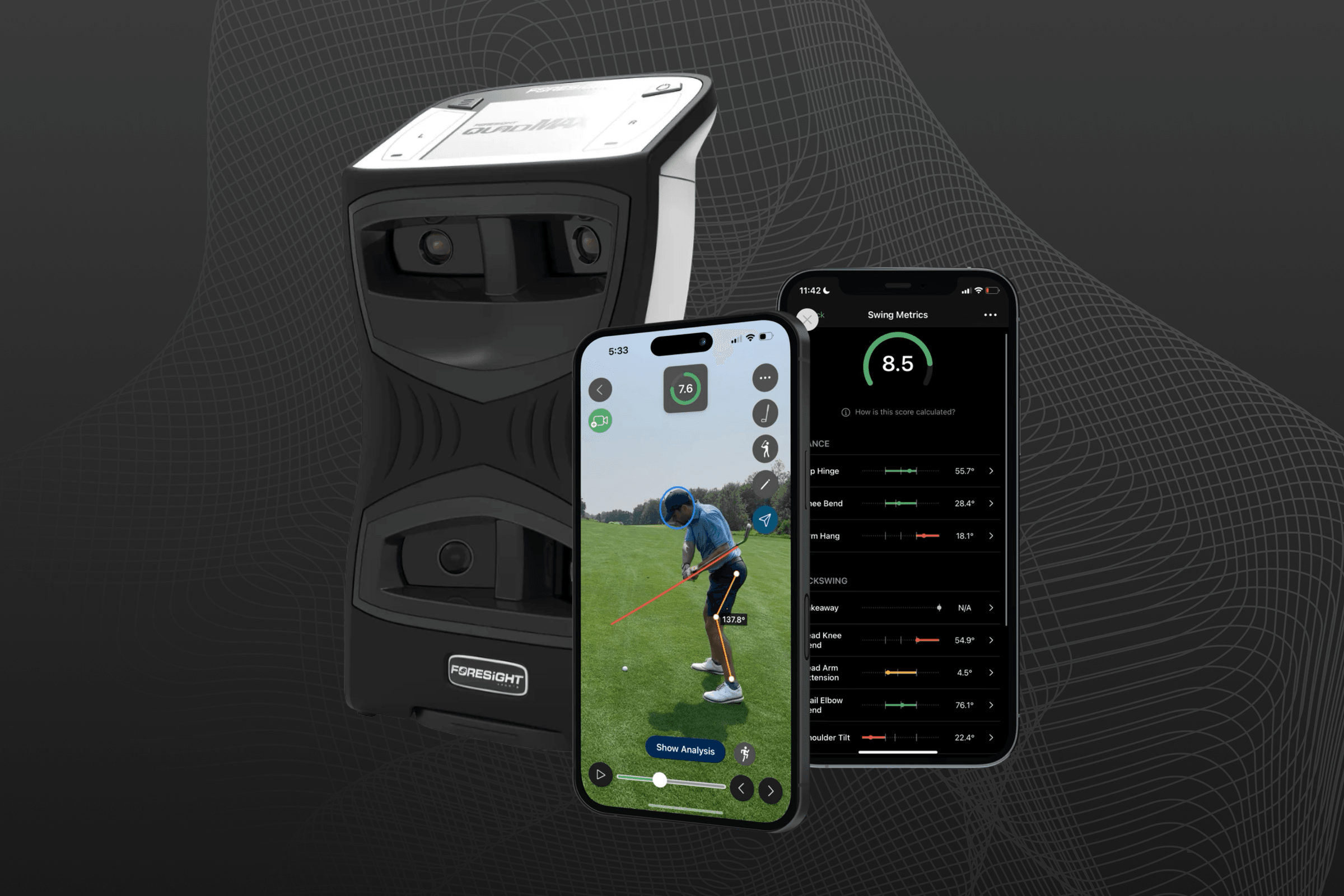
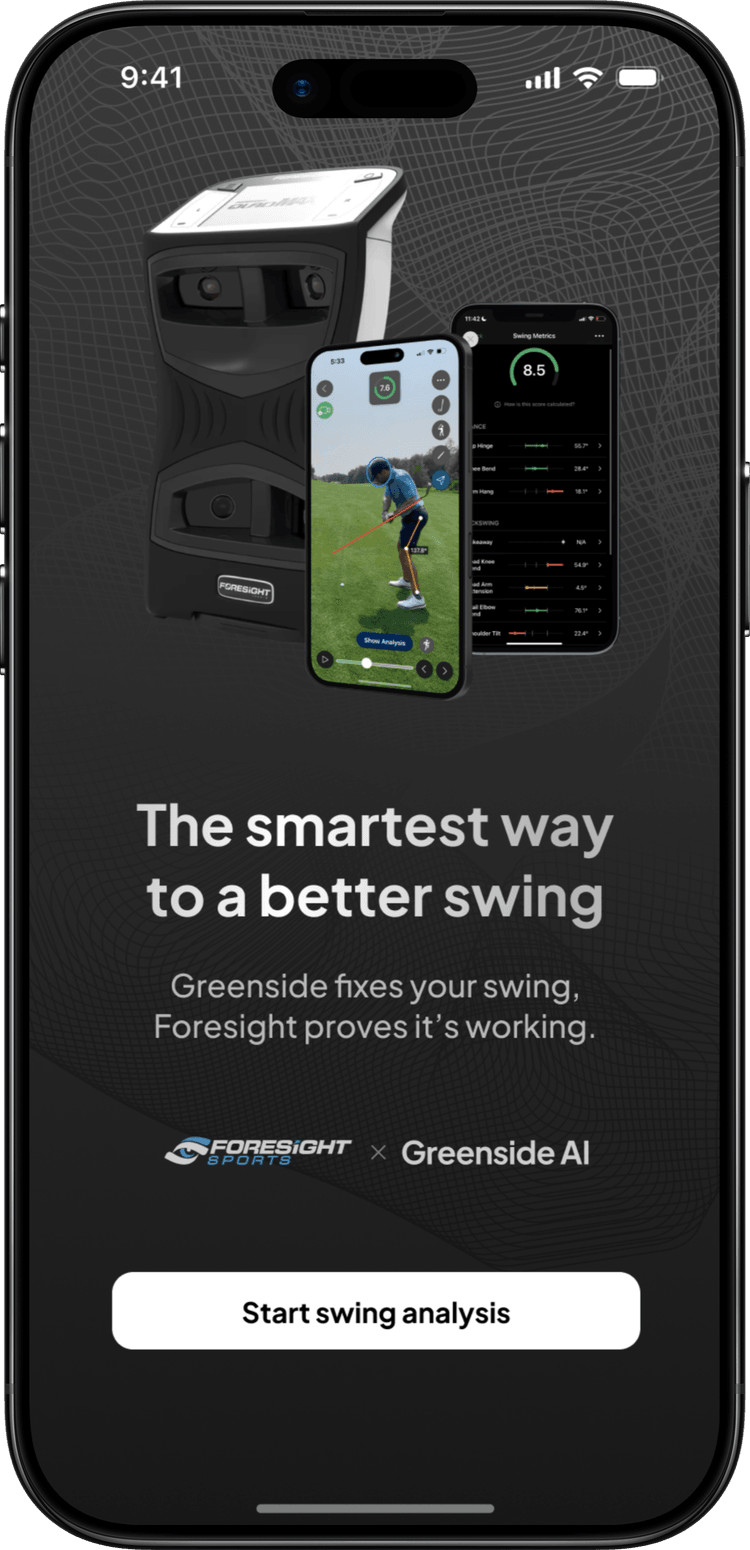
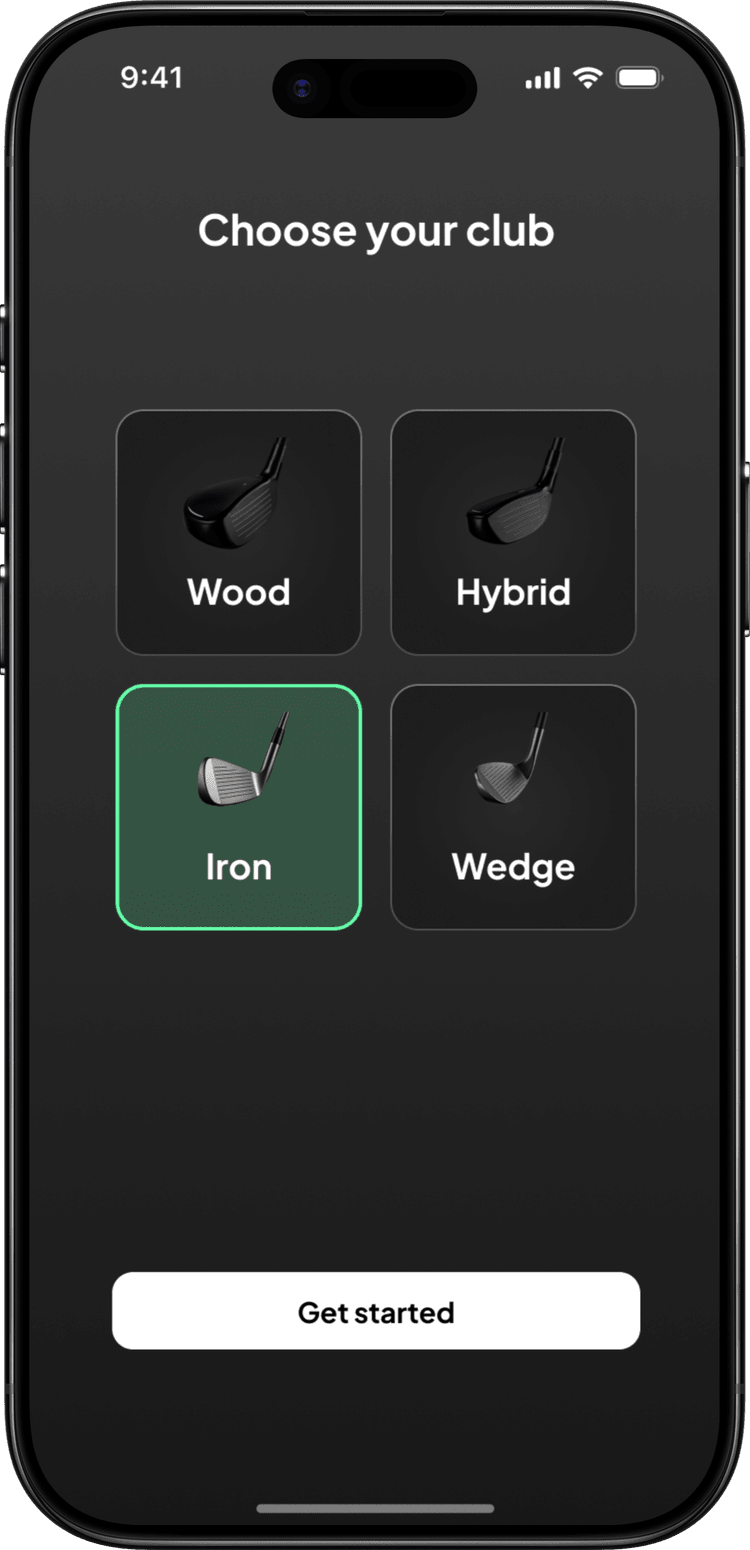
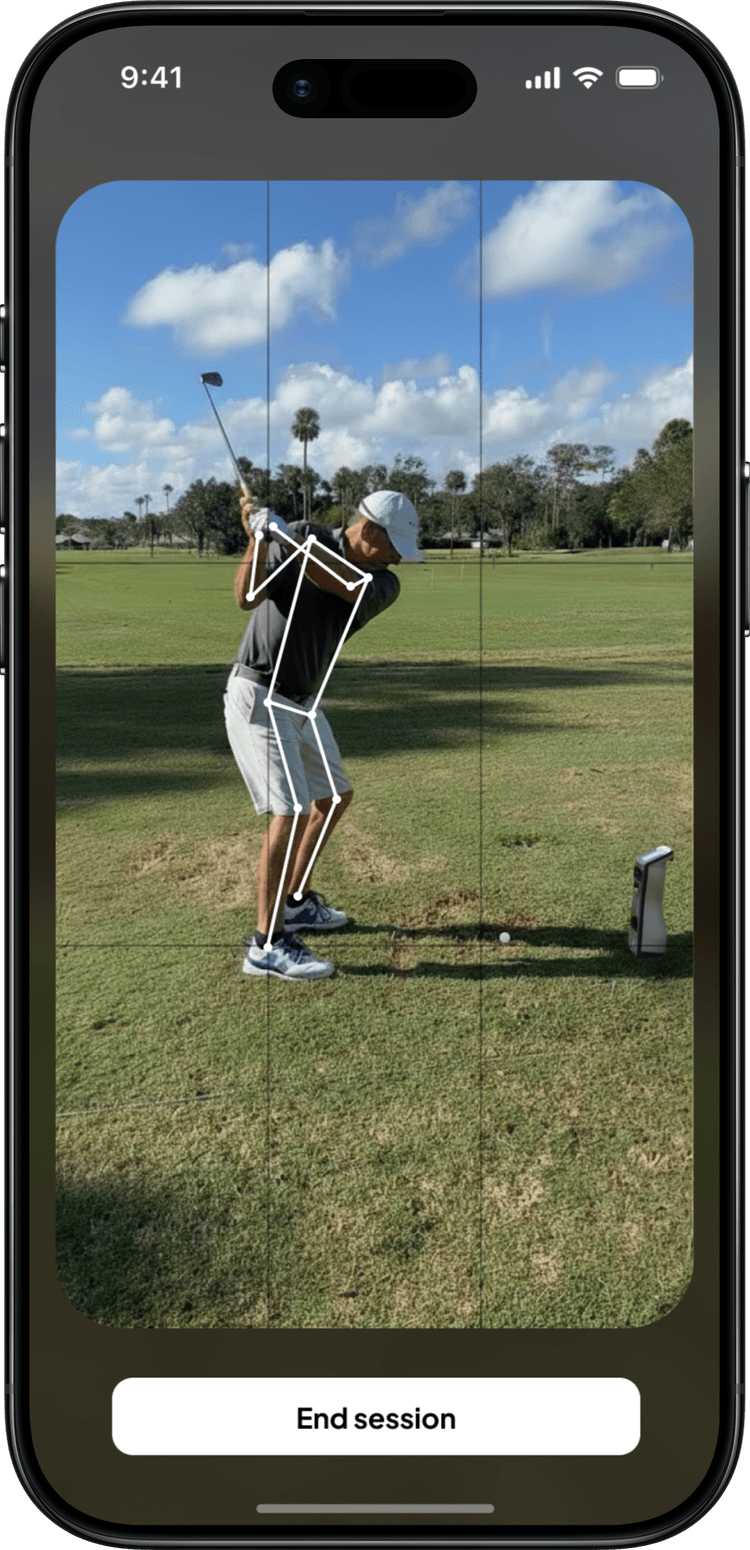
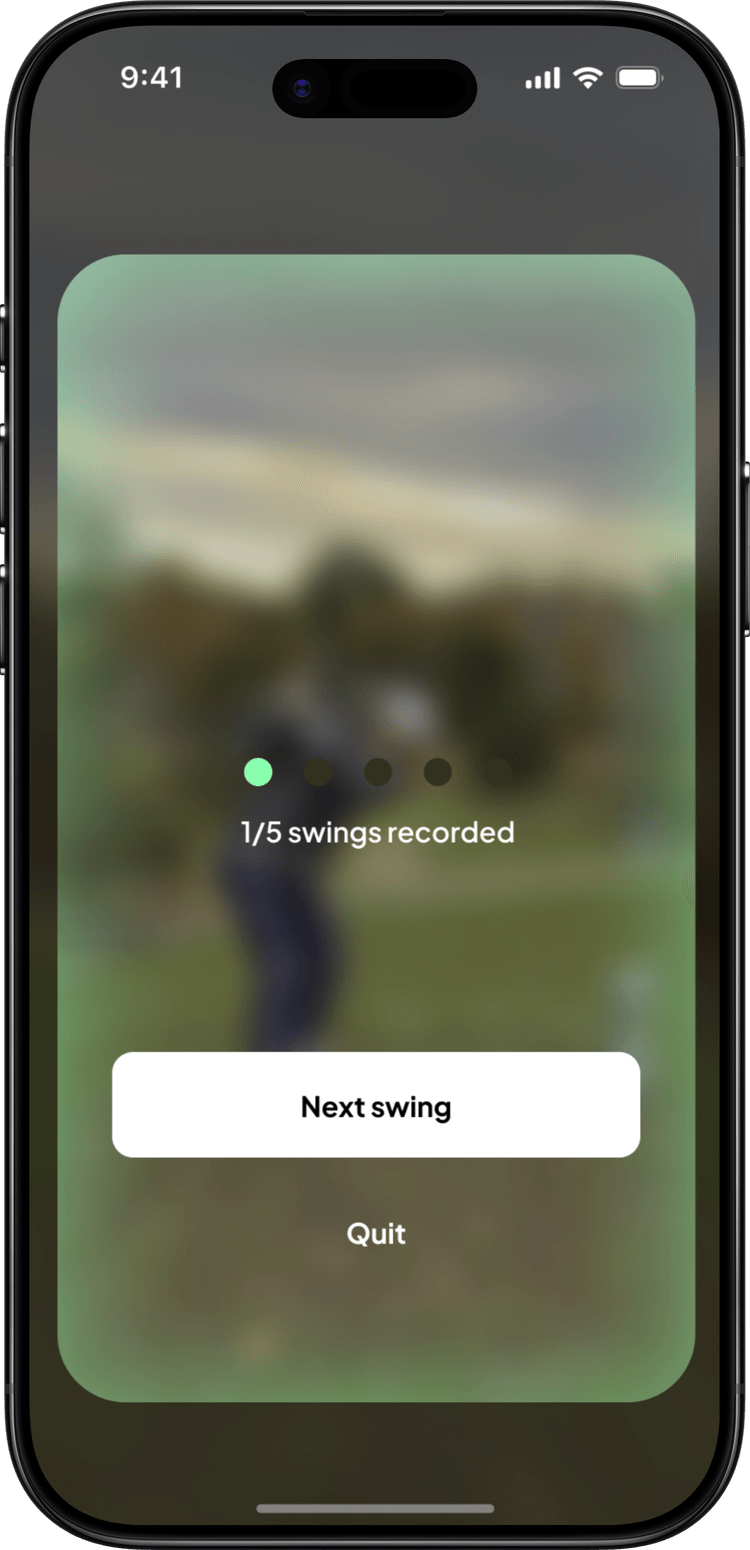
Foresight Sports launch monitors tell you what the ball did. Greenside AI's pose estimation tells you what your body did. As far as either company knew, nobody had connected the two. This was a one month contract to design that connection: a golfer picks a club, hits five swings, and walks away with one thing to work on. The Greenside team backed the concept and passed the designs to their developers.
The setup
Foresight's half. Launch monitors that capture twelve data points per swing. Ball speed, spin rate, carry distance, the works.
Greenside's half. Pose estimation that tracks the golfer's body through the swing frame by frame.
Put together, they can answer the question every range golfer actually has: what am I doing wrong, and what do I do about it.
I was the only designer on the contract, working directly with the Greenside team. One month, start to handoff.
The dashboard direction
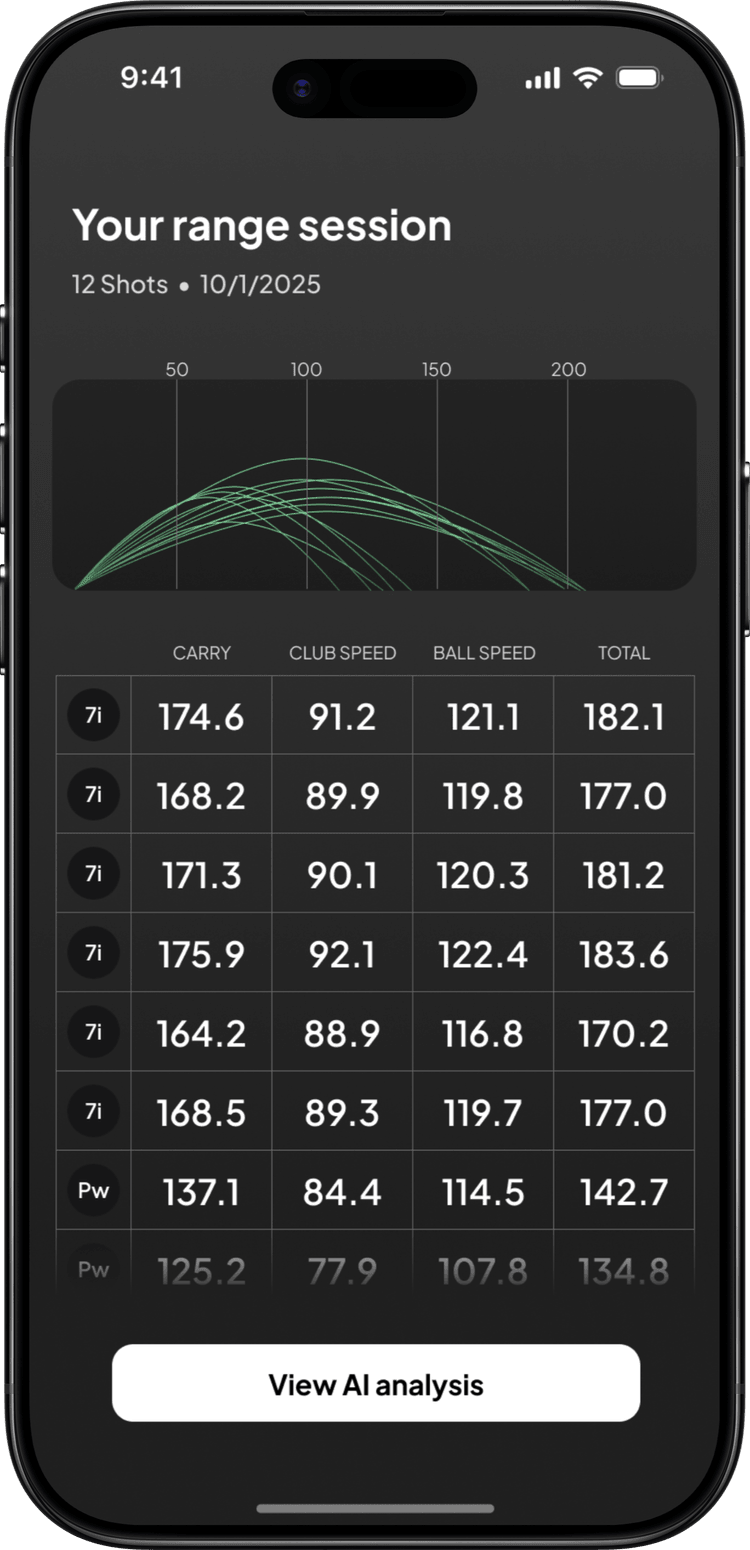
My first direction was a dashboard. Five swings, twelve data points each. Sixty measurements, and I proudly displayed all of them: a sortable session table, trend arrows, a detail drawer for each swing. It looked like a product for people who love data. That was the problem. I'd built the screen I wanted to look at, not the one a golfer needed.
It died in about ninety seconds. I put the prototype in front of a golfer at my local range, a weekend player somewhere in the mid teens. He scrolled the table twice, looked up, and asked "so what do I do with this?" He had fifteen minutes left in his bucket and a screen full of numbers with no answer. Fair question.

That question became the brief for everything after it. The numbers had to be there, but they weren't the point. The answer was.
The funnel
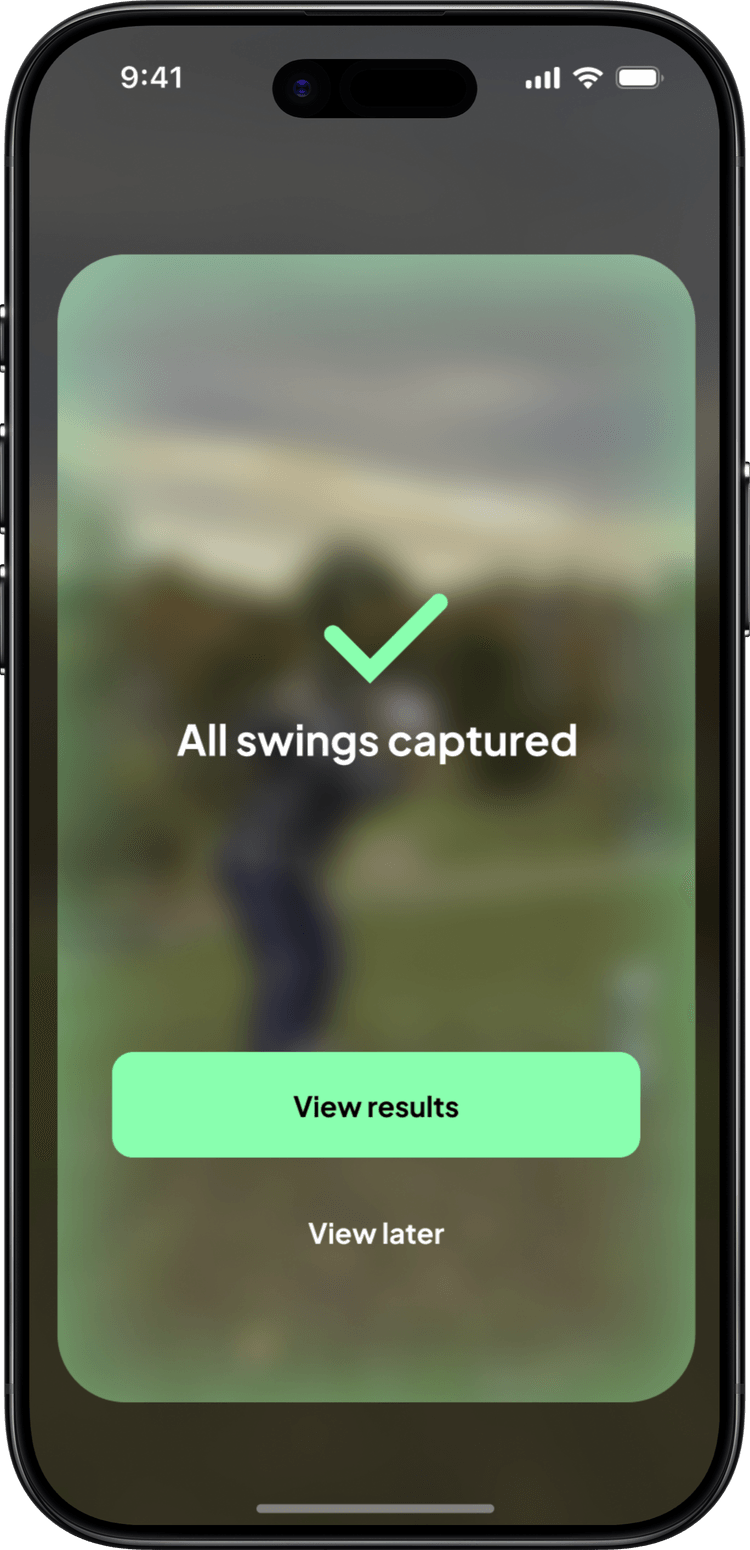
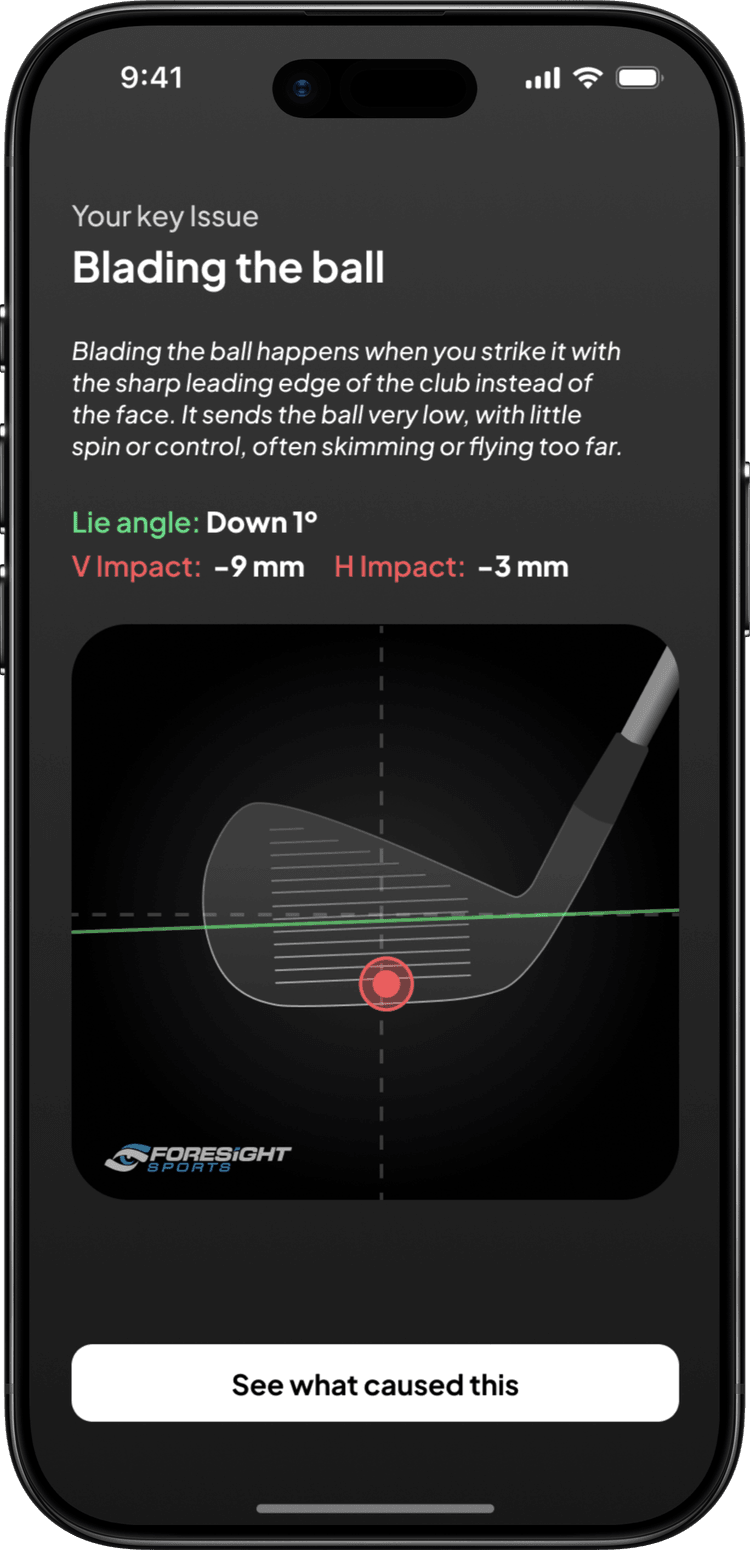
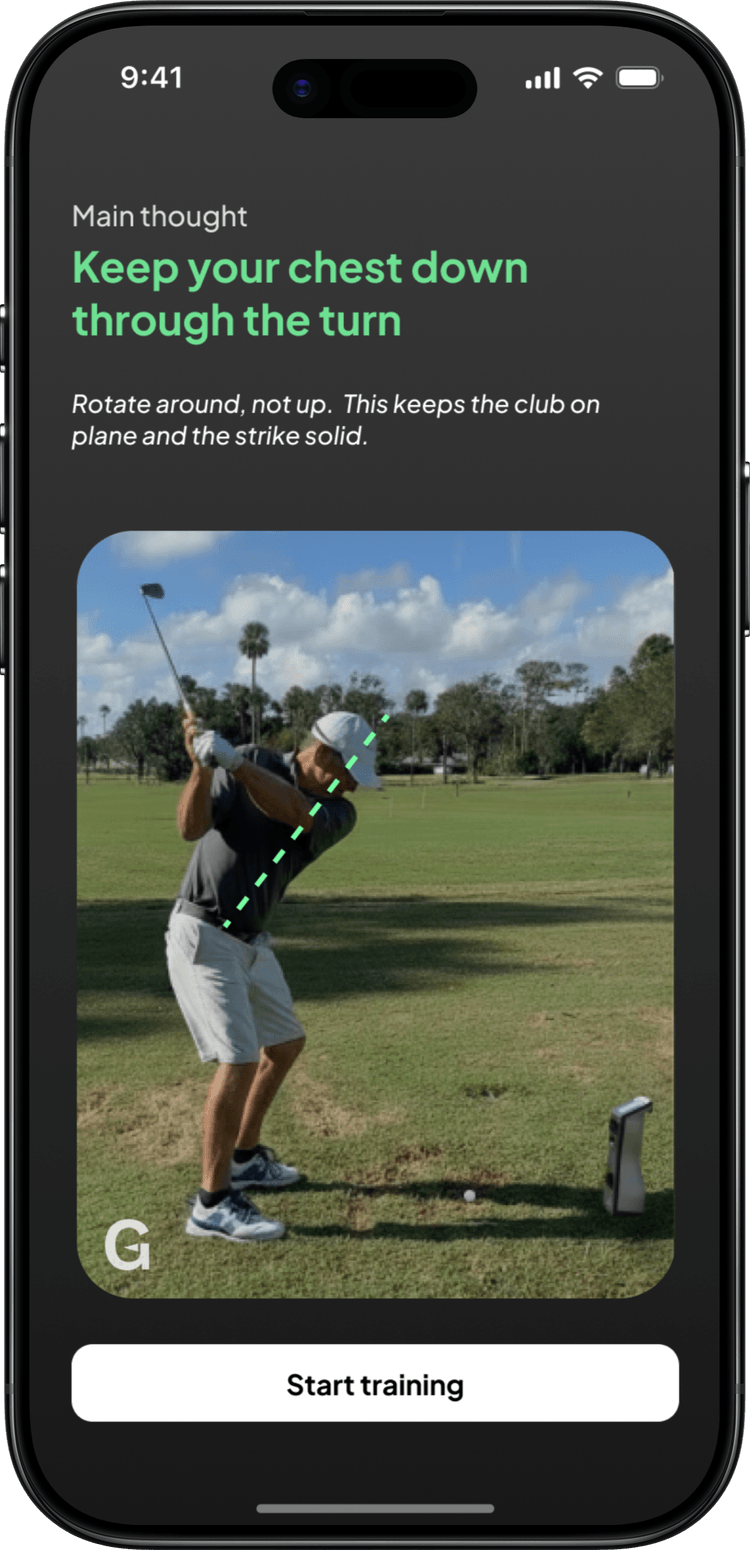
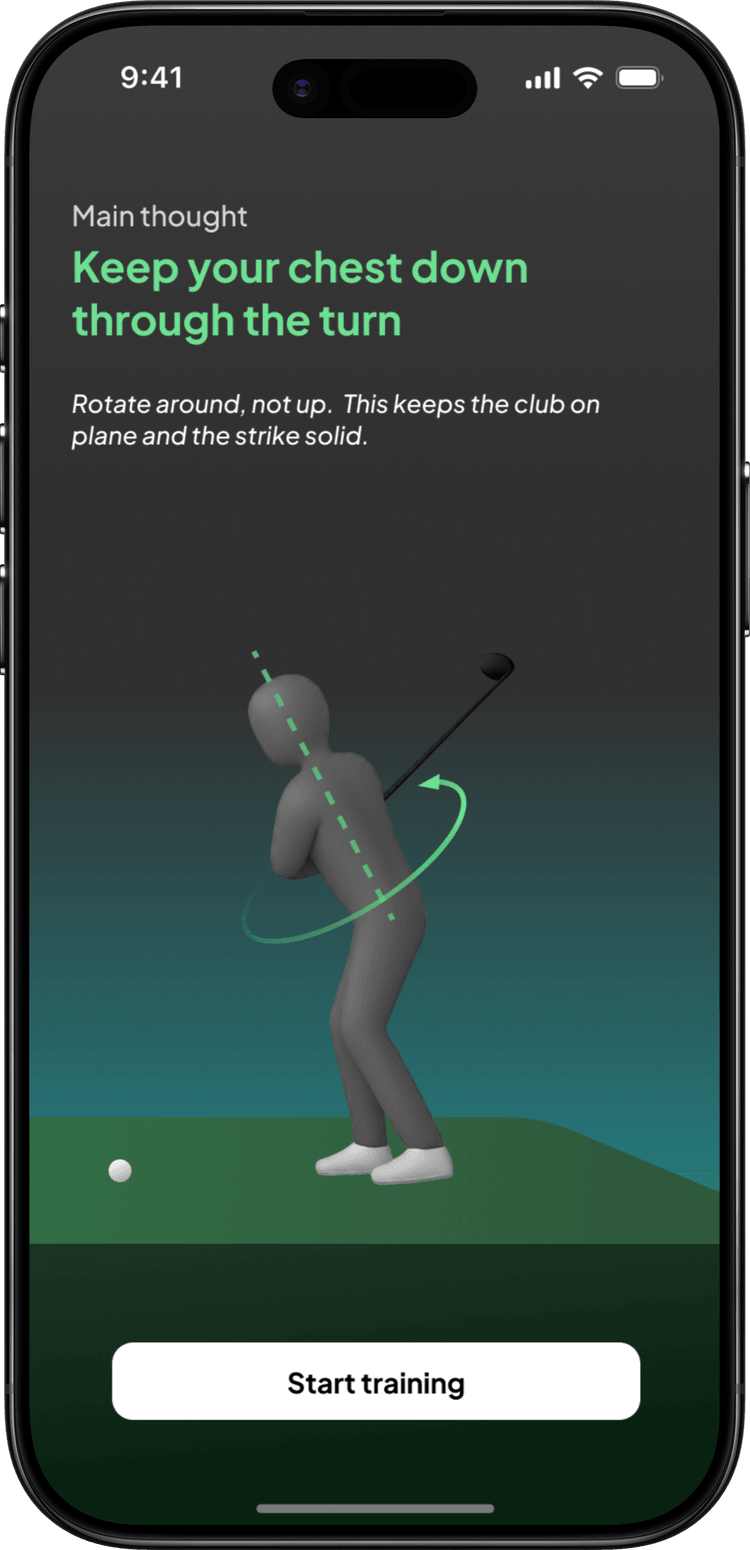
The redesigned flow treats those sixty measurements like a funnel. Five swings boil down to a pattern, the pattern points at one key issue, the issue gets pinned on a biomechanical cause, and the cause turns into one thought a golfer can hold in their head over the ball.
The results table survived, but demoted. It shows up after the fifth swing as context, proof the system saw what the golfer felt. Nothing in the flow asks anyone to interpret a number on their own.
Range language
The key issue screen is where the funnel pays off. It names the problem the way a playing partner would: "blading the ball." From there it bridges to the biomechanical cause, then to the one thought to take back to the mat.
I used AI constantly on this contract, mostly for speed. It scaffolded prototype screens in minutes and drafted coaching copy variants while I worked layouts. It earned its keep on structure and lost it on voice. Every issue description it drafted came back in instructor speak: "maintain your spine angle through impact," "early extension is compromising your low point." Accurate, and useless to the person standing on the mat. I rewrote every issue name in range language and pushed the mechanics one layer down, for golfers who want the why. Plain words up front, biomechanics behind them. That became a rule for the whole flow.
Photography or a mannequin
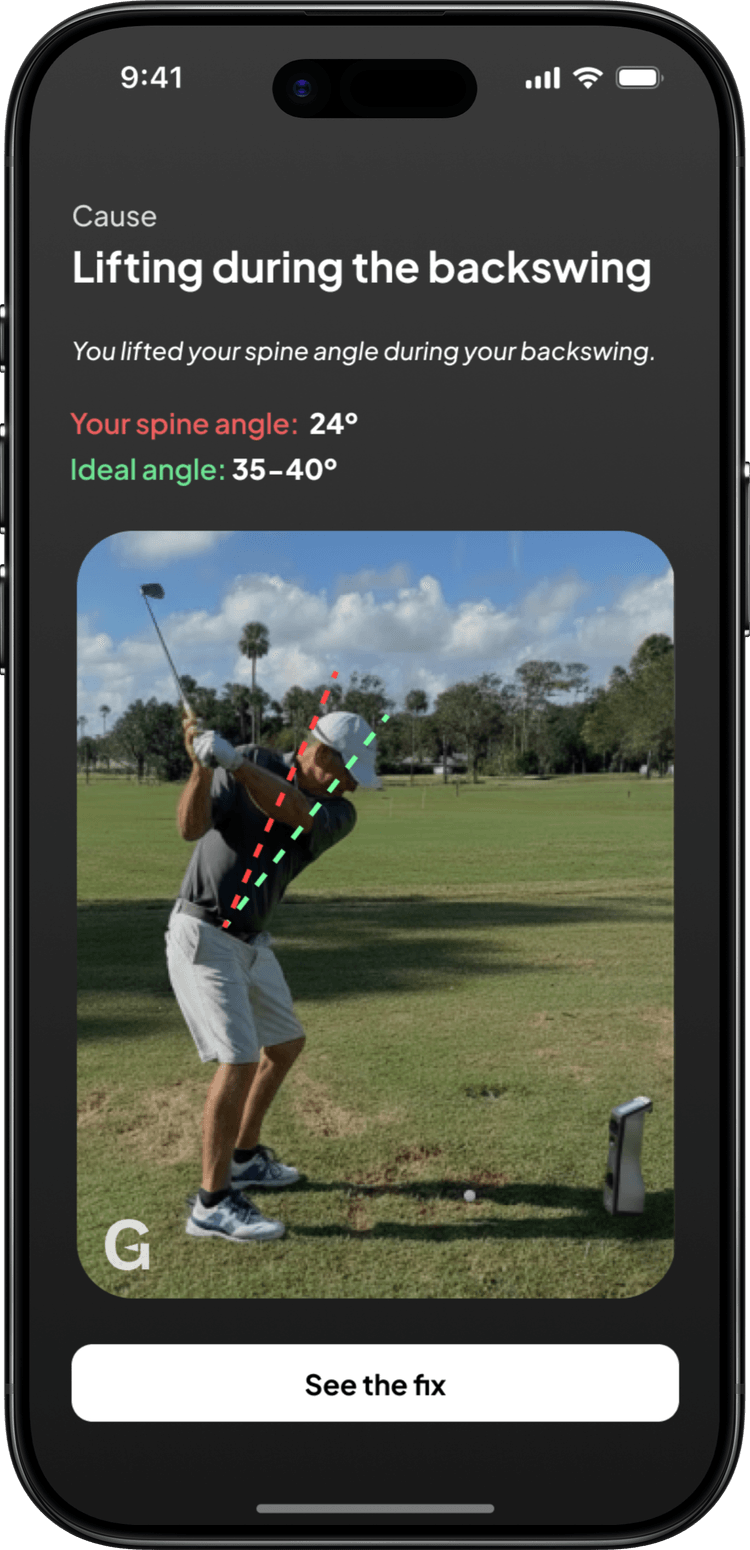
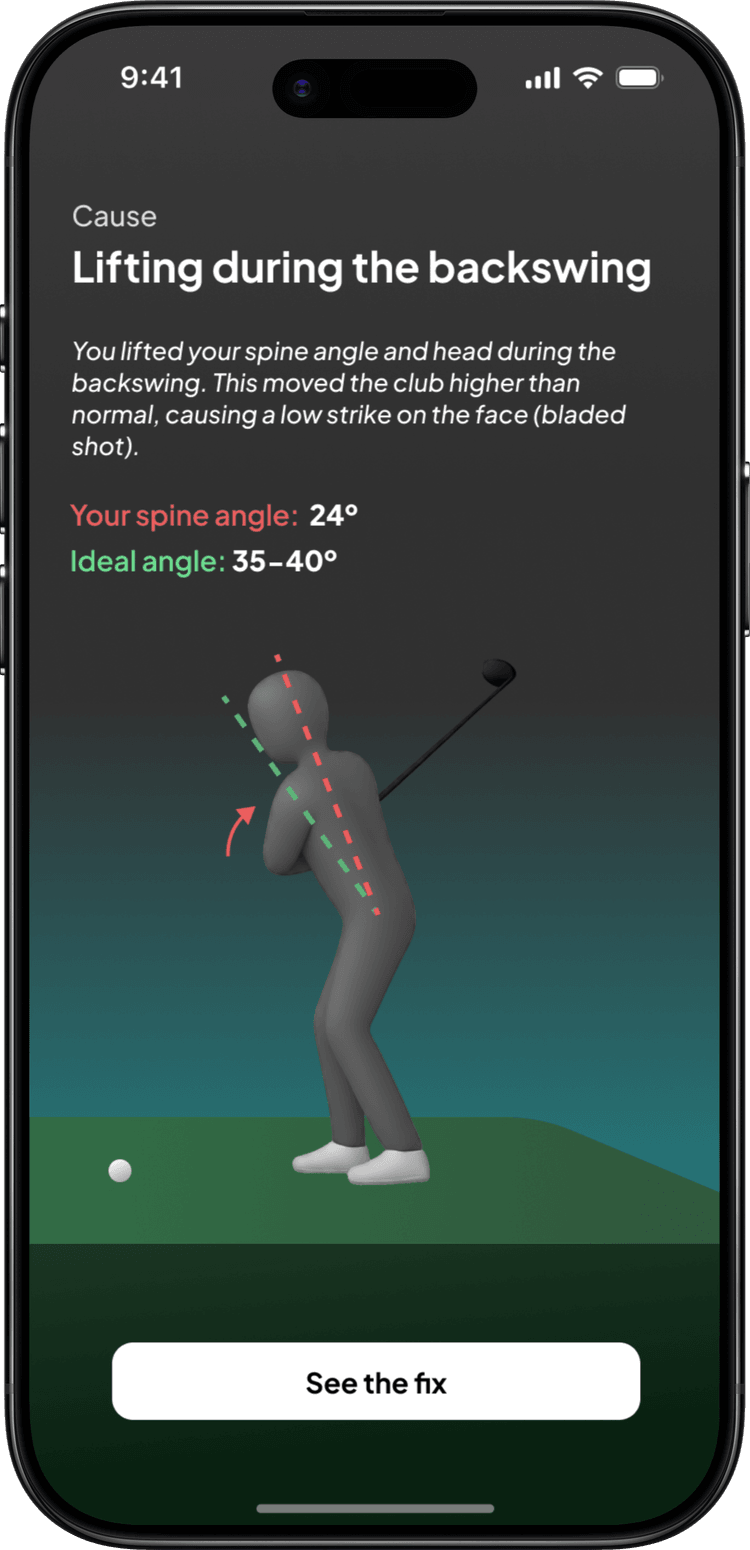
The cause and fix screens forked into two visual treatments, and the tradeoff was genuinely close, so I built both.
Real golfer photography is instantly relatable. You see a person at address and map it onto your own body. But it commits the product to a photo shoot for every issue and cause combination, and every photo quietly tells the golfer what a golfer is supposed to look like. Tall, athletic, usually male.
A generic 3D model is cheap and consistent, and it belongs to nobody's body type. A 55 year old with a bad hip can look at a gray mannequin without feeling judged. The cost is warmth. Nobody looks at one and thinks, that's me.
I handed off both treatments end to end with the tradeoffs written down. My recommendation was the 3D model for launch and photography later, once the issue library stabilized, because a wrong photo is worse than no photo.
Where it landed
The Greenside team bought the concept, and the premise underneath it: one clear thought beats sixty numbers. I handed the designs to their developers to build against the Foresight integration. In a market full of swing analyzers competing on feature count, one thought per session gave the product a point of view.
What I learned
One month punishes indecision. There was no time to revisit anything, so every call had to ship on the first pass. That mostly helped, but it also meant some decisions went out on my judgment alone. The photography versus mannequin question never got in front of an actual golfer. I wrote the tradeoffs down and picked one. On a longer contract that would have been a test, not a memo.
Kill your work at the range, not at your desk. I spent the better part of week one polishing a dashboard that ninety seconds with one golfer disqualified. The test cost nothing. The polish cost most of a week. I should have put the rough version in front of someone before I made it pretty.